By Edidiong Udoh
Preparing for the Next Wave
Innovation is moving faster than ever, and emerging markets are uniquely positioned to leapfrog traditional development paths. But speed alone is not enough. Startups, labs, and innovators need to anticipate trends, adopt the right tools, and structure their operations to remain resilient. The future belongs to those who can combine foresight with practical implementation, turning fragmented ideas into cohesive, scalable solutions.
Key Tools for Emerging Innovators
Technology is central to modern innovation. The tools available today enable teams to collaborate across geographies, reduce production friction, and accelerate learning. Some critical categories include:
Digital collaboration platforms: cloud-based project management, version control, and remote design tools ensure that geographically distributed teams operate as a single unit.
Prototyping and fabrication tools: 3D printers, CNC machines, and laser cutters allow innovators to iterate rapidly and test physical designs without relying on large industrial setups.
Data and analytics platforms: IoT sensors, AI tools, and dashboards enable monitoring of prototypes, production nodes, and resource utilisation in real time.
Open-source communities: access to shared code, designs, and research accelerates the learning curve and reduces duplication of effort.
By integrating these tools strategically, innovators can focus on problem-solving rather than reinventing the wheel.
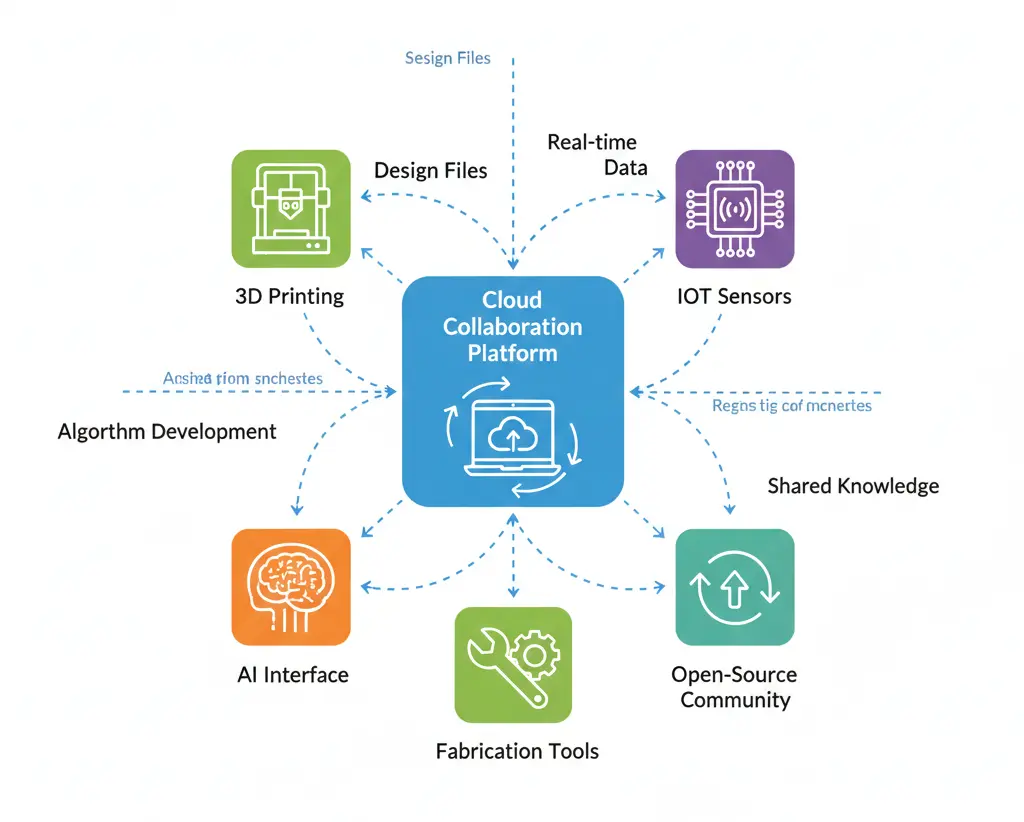
Image 1: Modern innovation toolkit
Strategies for Resilience
Resilience is not accidental; it is designed. Startups and innovation hubs can build resilience into their operations by focusing on:
Modular production: breaking workflows into independent units that can continue operating even if one node experiences disruption.
Energy autonomy: integrating hybrid energy systems to avoid reliance on inconsistent grids.
Digital coordination: using cloud-based scheduling and resource-tracking systems to synchronise distributed teams.
Diversified financing: combining grants, revenue-based financing, and early-stage investment to buffer against financial shocks.
These strategies ensure that innovation ecosystems are not only productive but capable of absorbing shocks from market, supply chain, or environmental disruptions.
Trends Shaping the Next Decade
Several emerging trends will define where innovation opportunities lie in the coming years:
Decentralised manufacturing: production networks that shorten supply chains and reduce dependence on centralised factories.
AI-assisted design and engineering: tools that accelerate iteration cycles, improve accuracy, and reduce waste.
Sustainable tech adoption: integrating energy-efficient practices and circular economy principles into production and operations.
Digital twin and simulation environments: allowing teams to prototype and test systems virtually before committing physical resources.
These trends are not theoretical; they are already influencing startups and labs in regions with strong digital and fabrication infrastructure.
.
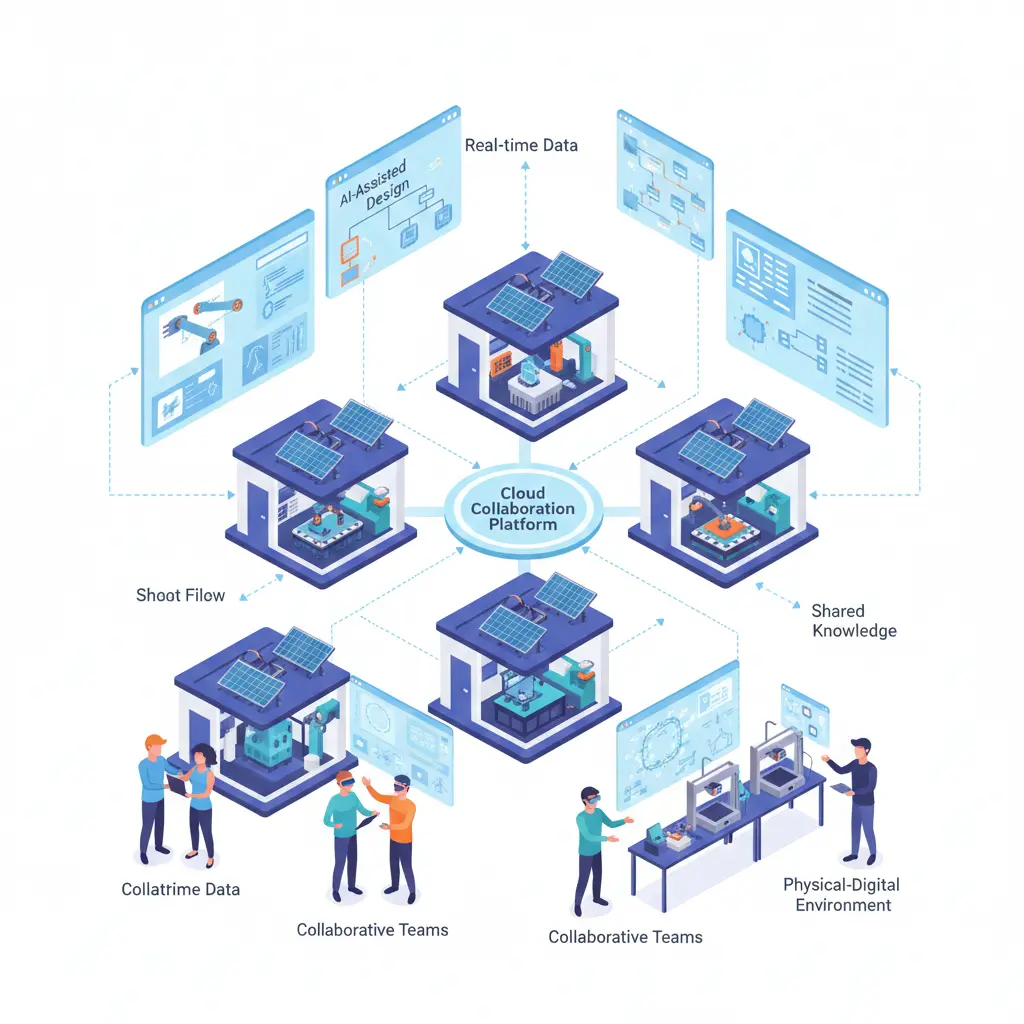 Image 2: Emerging trends in action
Building Human-Centric Ecosystems
No matter how advanced the tools or strategies, human talent remains central. Innovation ecosystems thrive when they combine structured training, mentorship, and knowledge-sharing programs. Key elements include:
— Apprenticeships and internships embedded in operational hubs.
— Collaborative projects linking universities, labs, and startups.
— Peer-to-peer learning networks that encourage skill diffusion and retention.
When human capital is nurtured alongside technology, the ecosystem gains longevity, adaptability, and the ability to generate compounded innovation effects.
Measuring Readiness and Impact
Startups and ecosystems that aim to be future-proof must track both operational and systemic metrics. Examples include:
Operational efficiency: prototyping cycle time, production uptime, and digital coordination metrics.
Network density: number and quality of collaborations across nodes.
Skills development: number of trained personnel, certifications achieved, and knowledge-sharing sessions.
Resilience indicators: ability to maintain operations despite disruptions, energy stability, and financial buffers.
These metrics help innovators not just survive, but anticipate and shape future challenges.
LastlyFuture-proofing innovation is not just about having the latest tools. It requires a deliberate combination of strategy, infrastructure, human capital, and ecosystem thinking. Startups and hubs that anticipate trends, adopt modular and resilient systems, and invest in their talent pipelines will not only survive disruption but thrive in a rapidly changing world. In emerging markets, this approach has the potential to leapfrog traditional industrialisation, creating ecosystems that are sustainable, connected, and deeply human-centric.