By Edidiong Udoh
Introduction: The Shift No One Is Talking About
Across Africa, the energy conversation is still dominated by large grid projects, national capacity targets, and megawatt announcements. Yet on the ground, something quieter, and arguably more transformative is happening.
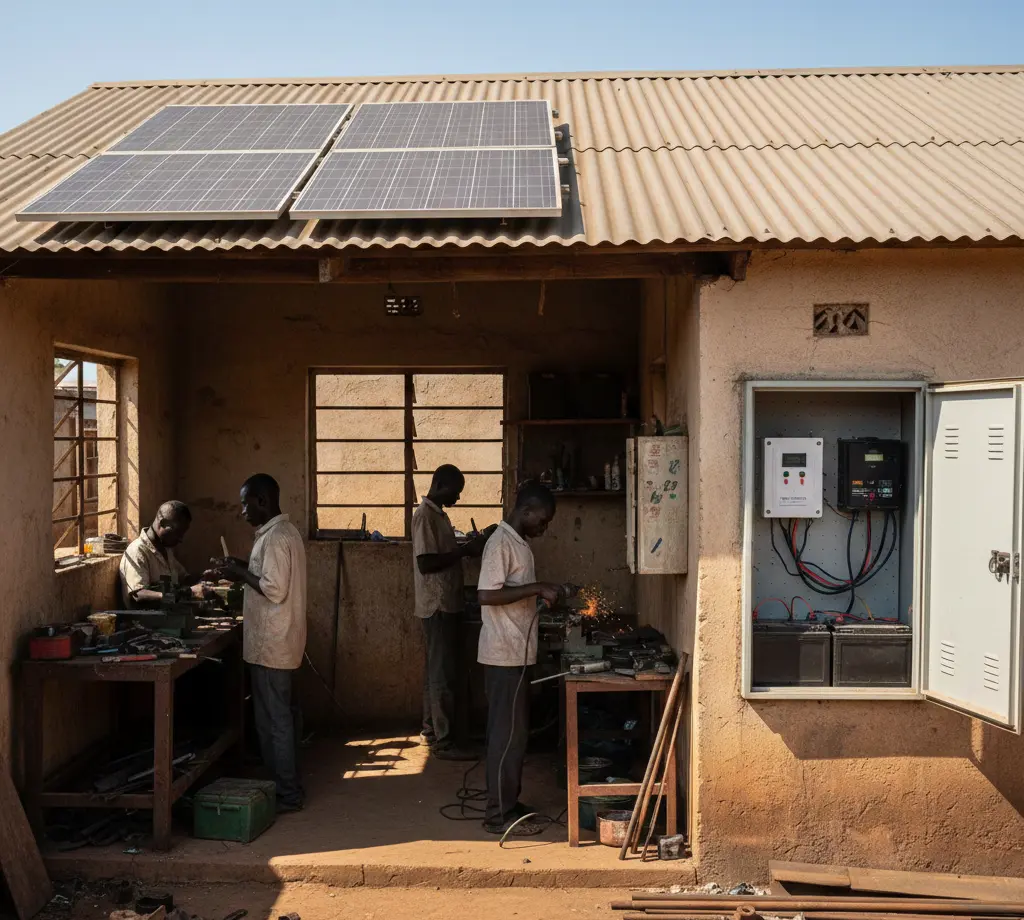
Communities, small businesses, schools, and innovation hubs are increasingly turning to small-scale, decentralised energy systems to power daily life. These systems are modular, adaptable, and built around real usage patterns rather than theoretical national projections.
This is the micro-energy revolution.
It is not driven by massive infrastructure budgets. It is driven by necessity, resilience, and ingenuity.
And in countries where grid instability remains a persistent constraint to productivity, micro-energy may prove to be the more scalable solution.
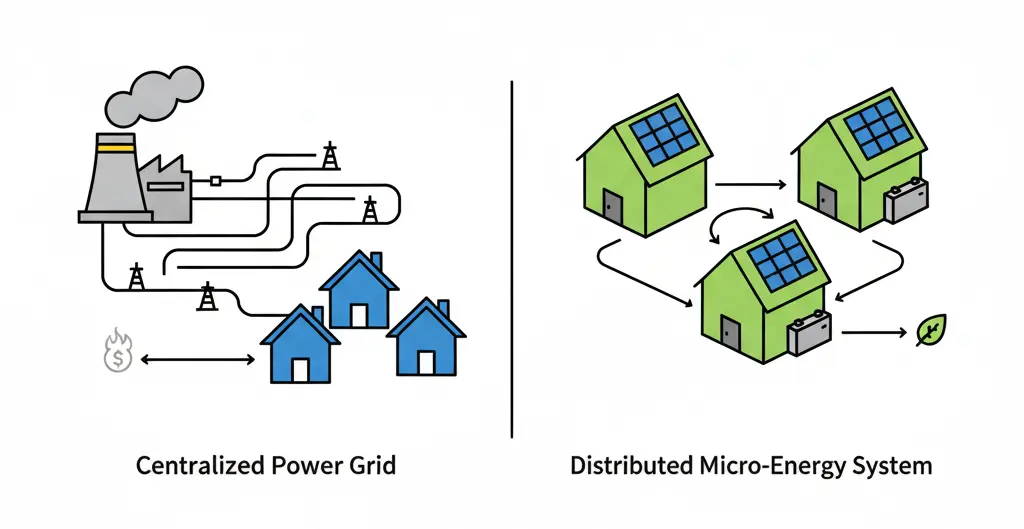
Centralised Power vs Distributed RealityTraditional electricity systems were designed for stable, industrial economies: one large power source distributing electricity outward through long transmission lines to millions of users
The weakness of this model becomes obvious in environments where:1. Transmission losses are high2. Infrastructure maintenance is inconsistent3. Demand exceeds generation capacity4. Outages are frequent
In such conditions, reliance on a single centralised grid creates vulnerability.Micro-energy systems invert this structure.Instead of one source feeding millions, many small sources serve local needs directly. Power generation becomes distributed. Communities are no longer passive recipients; they become producers.Solar mini-grids, battery hubs, and even human-powered generators operate independently of national bottlenecks.This does not eliminate the grid. It reduces dependence on it.
Why This Matters in 2026Three forces make micro-energy especially relevant right now.
1. Economic Survival for Small BusinessesIn many urban and peri-urban areas, small manufacturers and workshops cannot afford prolonged outages. Generator fuel costs continue to eat into margins. Voltage fluctuations damage equipment. Productivity drops.
A modest solar + battery system can stabilise operations and reduce long-term fuel dependency. While the upfront cost exists, the predictability of power significantly improves operational planning.Reliable energy is not just about convenience. It is business stability.
2. Energy as a Platform for InnovationInnovation hubs, fabrication labs, and technical training centres require consistent electricity to function effectively. CNC machines, 3D printers, soldering stations, and computer labs all depend on a steady power supply.
Decentralised systems allow these spaces to operate independently of grid volatility.When innovators are not worrying about outages, they focus on building solutions.This shift turns energy from a constraint into an enabler.
3. Resilience in Unstable SystemsClimate change, urban growth, and infrastructure strain are increasing pressure on central grids globally. Even in developed countries, decentralised energy is gaining traction as a resilience strategy.
For emerging economies, adopting micro-energy is not futuristic. It is practical.Communities with local generation capacity recover faster from disruptions. Schools maintain digital access. Clinics preserve essential services.Resilience is local before it becomes national.
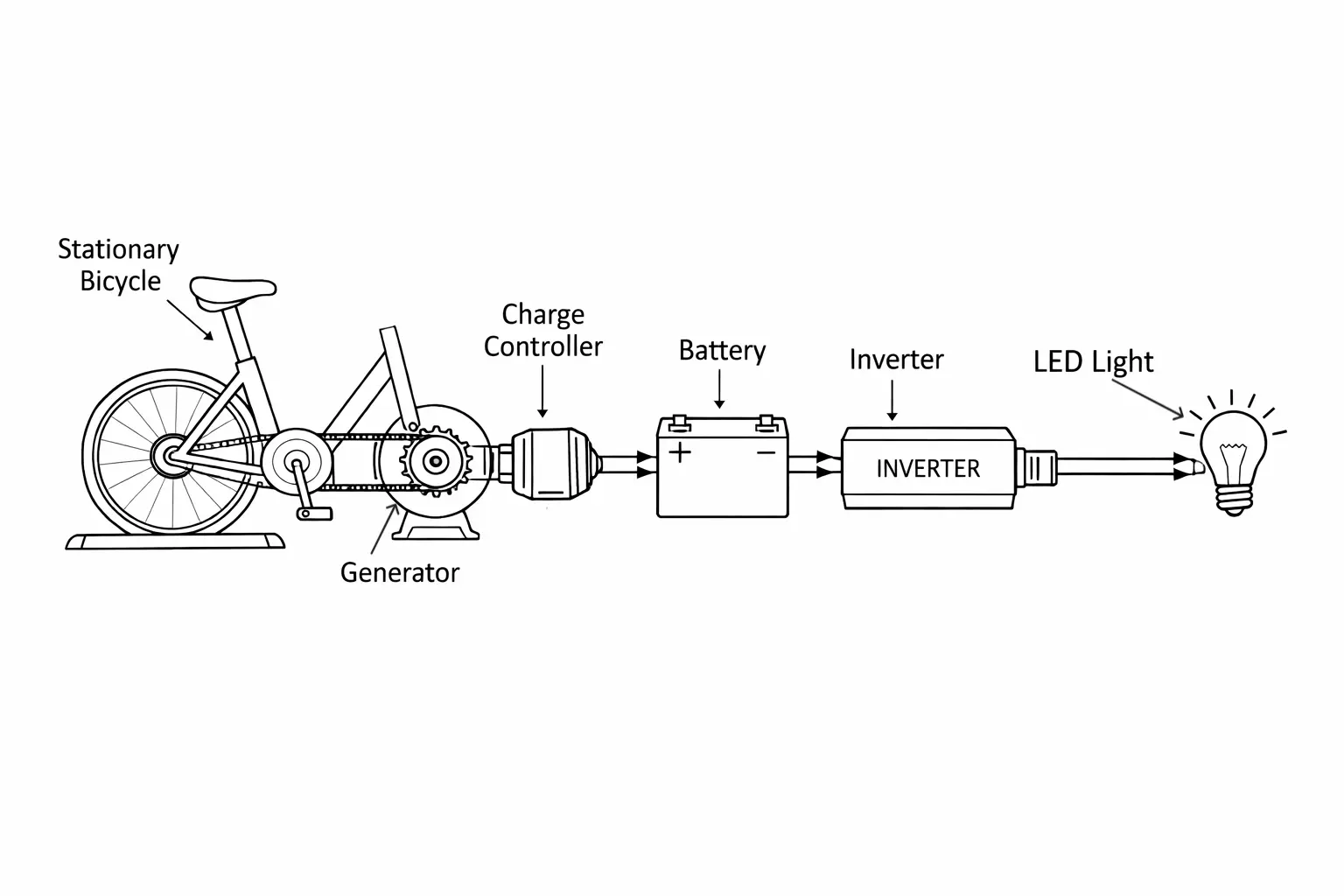
The Human Energy DimensionAmong the most interesting developments in decentralised systems is the integration of human-powered generation.While it may sound experimental, human-powered generators offer unique advantages in certain contexts:1. Extremely low operational cost2. Minimal technical complexity3. Dual function (energy + health)4. Educational value for STEM learning
When integrated into community spaces, human-powered systems reinforce awareness of energy consumption. Users directly experience the effort required to produce electricity.This awareness shifts behaviour.Energy stops being abstract. It becomes tangible.
In environments where affordability and accessibility are critical, such systems complement solar and battery storage rather than compete with them.
The Economics of Small-Scale PowerCritics often argue that decentralised systems lack scale.But scale in energy should not only be measured in megawatts. It should be measured in impact per community.
A 5kW system powering a fabrication lab may unlock dozens of prototypes.A 10kW mini-grid powering a cluster of small businesses may sustain livelihoods.A hybrid solar-battery-human system in a school may extend learning hours significantly.
Scale can be cumulative.Thousands of small systems, deployed strategically, can achieve transformative economic impact without waiting for multi-billion-dollar infrastructure projects.
What Builders Should Be Paying Attention ToFor engineers, innovators, and entrepreneurs, the opportunity lies not just in installation but in integration.Key areas to explore:1. Modular battery storage solutions2. Affordable inverter design3. Energy monitoring and optimisation systems4. Hybrid renewable-human systems5. Community-scale deployment modelsThe next decade will reward those who understand energy not as a static utility, but as a flexible, localised system.
The Bigger Picture: Energy as AgencyAt its core, the micro-energy revolution is about agency.When communities generate power locally: They reduce vulnerability They increase predictability They expand productivity They stimulate innovation
This is not an anti-grid movement. It is a pro-resilience movement.Central grids will remain essential. But the future of power in many emerging economies will be hybrid, distributed, and participatory.Small systems. Big impact.And for builders willing to think beyond traditional infrastructure models, the opportunity is significant.
Closing NoteThe energy question is no longer just “How much can we generate?”It is increasingly, “How intelligently can we distribute and localise it?”Micro-energy systems may not dominate headlines.But they are quietly redefining what power means at the community level.And that shift is just getting started.
Communities, small businesses, schools, and innovation hubs are increasingly turning to small-scale, decentralised energy systems to power daily life. These systems are modular, adaptable, and built around real usage patterns rather than theoretical national projections.
This is the micro-energy revolution.
It is not driven by massive infrastructure budgets. It is driven by necessity, resilience, and ingenuity.
And in countries where grid instability remains a persistent constraint to productivity, micro-energy may prove to be the more scalable solution.
Three forces make micro-energy especially relevant right now.
1. Economic Survival for Small Businesses
In many urban and peri-urban areas, small manufacturers and workshops cannot afford prolonged outages. Generator fuel costs continue to eat into margins. Voltage fluctuations damage equipment. Productivity drops.
A modest solar + battery system can stabilise operations and reduce long-term fuel dependency. While the upfront cost exists, the predictability of power significantly improves operational planning.
Reliable energy is not just about convenience. It is business stability.
2. Energy as a Platform for Innovation
Innovation hubs, fabrication labs, and technical training centres require consistent electricity to function effectively. CNC machines, 3D printers, soldering stations, and computer labs all depend on a steady power supply.
Decentralised systems allow these spaces to operate independently of grid volatility.
When innovators are not worrying about outages, they focus on building solutions.
This shift turns energy from a constraint into an enabler.
3. Resilience in Unstable Systems
Climate change, urban growth, and infrastructure strain are increasing pressure on central grids globally. Even in developed countries, decentralised energy is gaining traction as a resilience strategy.
For emerging economies, adopting micro-energy is not futuristic. It is practical.
Communities with local generation capacity recover faster from disruptions. Schools maintain digital access. Clinics preserve essential services.
Resilience is local before it becomes national.
The Human Energy Dimension
Among the most interesting developments in decentralised systems is the integration of human-powered generation.
While it may sound experimental, human-powered generators offer unique advantages in certain contexts:
1. Extremely low operational cost
2. Minimal technical complexity
3. Dual function (energy + health)
4. Educational value for STEM learning
When integrated into community spaces, human-powered systems reinforce awareness of energy consumption. Users directly experience the effort required to produce electricity.
This awareness shifts behaviour.
Energy stops being abstract. It becomes tangible.
In environments where affordability and accessibility are critical, such systems complement solar and battery storage rather than compete with them.
The Economics of Small-Scale Power
Critics often argue that decentralised systems lack scale.
But scale in energy should not only be measured in megawatts. It should be measured in impact per community.
A 5kW system powering a fabrication lab may unlock dozens of prototypes.
A 10kW mini-grid powering a cluster of small businesses may sustain livelihoods.
A hybrid solar-battery-human system in a school may extend learning hours significantly.
Scale can be cumulative.
Thousands of small systems, deployed strategically, can achieve transformative economic impact without waiting for multi-billion-dollar infrastructure projects.
What Builders Should Be Paying Attention To
For engineers, innovators, and entrepreneurs, the opportunity lies not just in installation but in integration.
Key areas to explore:
1. Modular battery storage solutions
2. Affordable inverter design
3. Energy monitoring and optimisation systems
4. Hybrid renewable-human systems
5. Community-scale deployment models
The next decade will reward those who understand energy not as a static utility, but as a flexible, localised system.
The Bigger Picture: Energy as Agency
The Bigger Picture: Energy as Agency
At its core, the micro-energy revolution is about agency.
When communities generate power locally:
They reduce vulnerability
They increase predictability
They expand productivity
They stimulate innovation
This is not an anti-grid movement. It is a pro-resilience movement.
Central grids will remain essential. But the future of power in many emerging economies will be hybrid, distributed, and participatory.
Small systems. Big impact.
And for builders willing to think beyond traditional infrastructure models, the opportunity is significant.
Closing Note
The energy question is no longer just “How much can we generate?”
It is increasingly, “How intelligently can we distribute and localise it?”
Micro-energy systems may not dominate headlines.
But they are quietly redefining what power means at the community level.
And that shift is just getting started.